
Online Store vs. Instagram Page: Which Is Better for Selling?
This question usually comes up once your sales are past the testing stage. Say you run an accessories and jewelry shop selling earrings, bracelets and necklaces in sterling silver, plus handmade fashion jewelry. Your Instagram account has been active for a few months, orders come in through DMs, and now you get dozens of messages a day asking “How much is this one?” and “Does it come in gold?” That’s when the online store vs. Instagram question gets serious: should you launch an online store, or is your Instagram page enough?
The short answer is that a website and an Instagram page are two tools with different jobs, and comparing them is like comparing a storefront window with the shop itself. The more precise answer depends on what you sell, your order volume, your budget and how much you’re willing to depend on a single platform.
Below, we compare the two paths on specific criteria, look at which kind of seller each one suits, explain why many businesses keep both side by side, and finish with a decision checklist.
What does each one actually do?
Before comparing them, it helps to be clear about each tool’s real role.
Instagram page: a place to get seen and start conversations
Instagram is a social network, not a sales system. Its main strength is that people come across your products without actively searching for them: a Reel showing how to style earrings with an outfit, a Story of an order being packed, a post about a new collection. Shoppers see the product alongside your brand’s face and style, ask questions and get convinced through conversation.
On the other hand, Instagram isn’t designed for neatly displaying hundreds of products, browsing by price or category, taking orders with a full address, or keeping a customer’s purchase history. A seller with only an Instagram account usually handles all of that in DMs, a notebook and a spreadsheet.
Online store: a shop in your own name
An online store is where your products are displayed with price, photos, stock and full details, and where a shopper can pick a product, add it to the cart and place an order without having to ask. You decide how the store is organized, and your customer and order data is in your hands.
The weakness of a website is that it doesn’t get visitors on its own. A site with no traffic coming from Instagram, Google or ads is like a shop on a quiet side street: tidy and well stocked, but empty.
Online store vs. Instagram page at a glance
The table below is a realistic summary of each path’s strengths and weaknesses. “Better” in any row doesn’t mean better in every case. It depends on your situation.
| Criterion | Instagram page | Online store |
|---|---|---|
| Reach and new audiences | Strong. Content can reach people who don’t know you | Weak at first. Needs traffic from Instagram, Google or ads |
| Shopper trust | Depends on your account’s history, content quality and responsiveness | More formal structure, clear information and a defined checkout |
| Cost and speed to launch | Almost no infrastructure cost and very fast | Requires a build cost or subscription, plus time to prepare products |
| Control and ownership | The platform sets the rules | The structure, content and data are yours |
| Showing up on Google (SEO) | Limited. Posts don’t replace product pages | Product and category pages can rank in search |
| Platform risk | High. An outage or account restriction can stop sales | Lower, but still depends on traffic sources |
| Catalog display | Fine for a few dozen products, hard with a wide range | Categories, search and color and size variants |
| Ordering and operations | Manual and message based, unless you use a helper tool | Structured. Address, phone and items are captured together |
| Customer conversations | Very strong and natural | More limited, usually through contact buttons |
Weighing each criterion in more detail
The table shows the big picture, but each criterion doesn’t carry the same weight for every seller. In this section we look at each one through the example of the same jewelry shop.
Reach: Instagram brings people in, the store keeps them
If your jewelry looks striking, Instagram is its natural habitat. A short video of a necklace catching the light does more than any written description. A website plays no role at that stage. But once someone is interested, the store is where they can see the whole collection without messaging you about every piece and waiting for a reply.
Trust: both can build it or break it
Shoppers are used to buying from Instagram sellers, but concerns like “Will it look like the photo?” or “If I send a bank transfer, will the order actually ship?” never go away. A website eases those concerns by showing fixed prices, shipping terms, contact details and a business address. On the flip side, a half finished site with out of stock products and unclear contact info builds less trust than an active, responsive Instagram account. For cheaper items like fashion jewelry, shoppers will buy with less trust. For silver or gold pieces with a higher price tag, the transparency of a website matters more.
Cost: the cheapest option isn’t always the least expensive
An Instagram account has no infrastructure cost, but its hidden cost is time. Say you spend three hours a day answering the same price and availability questions and writing every order into a notebook by hand. That time is a real business cost. An online store has a build or subscription cost, but it removes some of that repetitive work. Website costs also vary widely depending on how you build it, from a custom design to a ready to use store builder. If you’re considering the no code route, review our criteria for choosing a store builder before you decide.
Control and ownership: whose land are you building on?
On Instagram, the algorithm, the page layout, the messaging rules and even whether your account stays active are up to the platform. Your customer list is really a follower list, not a list you can work with independently of Instagram. On your own site, customer names, phone numbers, purchase history and page structure are in your hands.
SEO: customers who are looking for you
Some jewelry shoppers buy by searching on Google, with phrases like “dainty silver bracelet” or “stainless steel hoop earrings.” That shopper intends to buy and is looking for a specific product. An Instagram post isn’t built for that kind of search, but a product page on a website with the right title, description and photo can show up in the results. SEO takes time and results aren’t guaranteed, but it’s one of the few ways to bring in customers with buying intent without daily content or ad spend.
Platform risk: all your eggs in one basket
An account that a business depends on for all its sales is vulnerable to any outage, algorithm change or account restriction. Instagram may restrict accounts that behave in a spammy way, and no tool or method can guarantee complete protection from those restrictions. A website doesn’t eliminate that risk, but at least it leaves you with an independent address where past customers can still buy from you.
Operations: where the difference shows at higher volume
With five orders a week, taking orders by hand in DMs isn’t a problem. With fifty, mistakes start: incomplete addresses, wrong colors, a lost payment receipt or an item sold twice. An online store captures each order with all its details in one place. If your sales are in DMs for now, organizing your orders from checkout to shipping solves part of the problem even before you build a site.
Which path suits which seller?
The right decision depends on where you are now. Consider a few common situations.
A new seller with limited capital. If you don’t know yet which designs sell best or how the market will react to your product, starting with an Instagram account makes sense. The cost of testing is low and you get direct customer feedback in your DMs. For this stage, our guide to starting an Instagram shop is a good starting point.
A seller with a wide product range. A jewelry shop with two hundred earring designs in several colors and materials will struggle to show them all on Instagram. Older posts get buried under new ones and customers can’t browse by price or category. For a seller like this, a website stops being a nice extra and becomes close to a necessity.
A seller of custom or consultation based products. If your product is, say, a name necklace or a custom ring and every order needs a conversation about the details, Instagram and DMs will stay at the center of your sales. In that case, the website works mostly as a showcase for your past work. To improve those conversations, review the stages of selling in DMs, from the first message to the order.
A seller who wants to accept card payments. Card payment providers have their own requirements, which may include a website, business details and posted store policies. If online card payments are a priority for you, factor that into your decision and check the current requirements with the providers you’re considering.
Why do so many sellers have both?
In practice, for most growing businesses the “website or Instagram” question becomes “website and Instagram, with what division of labor?” The common pattern looks like this:
- Instagram for discovery and conversation: Introducing new products, Reels, Stories, answering questions and building relationships with your audience.
- The online store for the catalog and ordering: Your full product range with prices and stock, categories, search and an order form.
- Links between the two: The store link in your bio, products featured in posts, and product page links sent in DMs.
This combination has one important challenge that gets overlooked: if products, stock and orders are recorded in two separate places, your workload doubles. Say you have only two of a certain bracelet left. One sells in a DM and at the same moment another customer orders the same bracelet on your site. If the site’s stock wasn’t updated by hand, you’ve sold something that doesn’t exist. So when you combine the two, the most important technical point is that products and stock come from a single source, and orders from both channels show up in one list.
Directchi is designed for exactly this pattern: a ready to use online store with a fixed template on a platform provided link, alongside Instagram DM automation that connects to your professional account through the official API, without needing your password. Products and stock are shared between your DMs and your store, stock is tracked with every order, and DM and store orders land in one list with source labels so you can tell them apart. Payment is by cash on delivery or bank transfer with a receipt photo that you check.
 Gold oval pendant 18 in 89 USD Add to cart
 Pure oud attar 6 ml 64 USD Add to cart
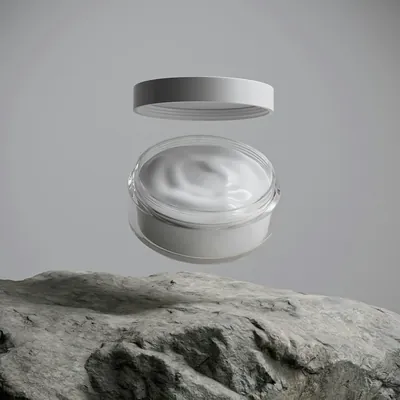 Silk face cream 50 ml 38 USD Add to cart
 Amber oud parfum 50 ml 120 USD Add to cart
Decision checklist: answer these questions before you choose
Answer each question honestly. The more “yes” answers you have, the more seriously you need an online store, either alongside your Instagram account or as the center of your sales.
- Do you have more than a few dozen products, or a significant range of colors, sizes and materials?
- Are a lot of your DMs repeat questions about price and availability?
- Have you ever sold something that wasn’t in stock, or had an order delayed because of an incomplete address?
- Do you have repeat customers who’d like to buy quickly without a conversation?
- Do you want people who search for your products on Google to find your shop?
- Would losing access to your Instagram account, even for a few days, stop your income completely?
- Are online card payments a priority for you?
- Do you have the time and capacity to prepare accurate photos, descriptions and prices for your products?
If most of your answers are “no,” your Instagram account is probably still enough, and your energy is better spent improving your content and responsiveness. If your answer to question 8 is “no,” prepare your product content first, even if you really do need a site. A website with poor photos and incomplete descriptions won’t do any better than your Instagram page.
If you decide to build a website, go in this order
Moving from “Instagram only” to “Instagram plus a website” doesn’t have to happen overnight. This sequence reduces the risk:
- Organize your product list. Write down each product’s name, price, stock, colors and sizes in one spreadsheet. That alone makes selling in DMs more organized too.
- Make your photos and descriptions consistent. Jewelry shot on the same background in good light looks more professional on a website. Include dimensions, materials and care instructions in the description.
- Choose how to build it. Depending on your budget and needs, decide between a custom design, open source platforms and ready to use store builders. Our complete guide to building an online store gives you the big picture of each route.
- Decide on payment and shipping. Settle on cash on delivery, bank transfer with a receipt or card payments, and on shipping costs with USPS, UPS or a local courier, before your site goes live.
- Test the checkout yourself. Place a test order from start to finish and see whether you get all the information you need to ship.
- Connect the site to your Instagram account. Put the link in your bio, mention it in captions and send product page links when answering repeat questions.
- Keep inventory in one place. If your tool doesn’t share stock across channels, set up a daily routine to sync stock between your site and your DMs.
The bottom line and your next step
An Instagram page is strong for attracting an audience, showing products attractively and talking with customers, and it’s the best low cost way to start. An online store wins at displaying your full catalog, organized ordering, showing up in search and reducing your dependence on one platform. For a shop like our jewelry example, with a wide product range and growing orders, the realistic answer is usually “both”: Instagram to bring customers in, and the store to sell to them.
The one thing you can’t forget in this combination is keeping everything connected: products, stock and orders need to be managed in one place so two sales channels don’t mean double the work and double the mistakes. Go through the checklist above with your business’s real situation in mind, and take your next step based on it.
Frequently asked questions
Is an Instagram account enough to sell online?
Many sellers start with just an Instagram account to test the market. But as products and orders grow, the lack of a searchable catalog, structured ordering and an asset you own outside one platform becomes a serious limitation.
Is an online store better than an Instagram page?
Neither is better in every case. Instagram is stronger for attracting an audience and having conversations. An online store is stronger for showing your full product range, organized ordering, showing up on Google and owning your business. For most sellers, combining the two makes the most sense.
Does having a website make customers trust you more?
A site that clearly shows contact details, upfront prices, shipping options and return terms gives shoppers the impression of a stable business. Still, a website alone doesn't build trust. How well you respond and deliver on time matter just as much.
Do Instagram products show up on Google?
Instagram posts aren't a good substitute for a website's product pages when people search for products on Google. If you want someone searching for a product name to find you, you need product pages with good titles and descriptions on a website.
Do I need a website to accept card payments?
It depends on the payment provider. Card processors set their own requirements, which can include a website, business details and posted policies. Check the current terms directly with any provider you're considering, since they can change.
How do I keep inventory in sync between my website and Instagram?
If stock is tracked in two separate places, the chance of selling something that's already gone goes up. The best approach is to keep products and stock in one shared system, so every order, from whichever channel, reduces the same stock count.